http://twocircles.net/2011jan25/reservation_dalit_muslims.html
Reservation for Dalit Muslims
Submitted by admin4 on 25 January 2011 - 2:59pm
Articles Dalit Indian Muslim
By M Naushad Ansari,
In response to a Public Interest Litigation (PIL) filed by Centre for Public Interest Litigation (CPIL), the Supreme Court, on January 4, 2011, stated that it would examine the constitutional validity of Ranganath Misra Commission recommendation for inclusion of dalit Muslims and Christians in the schedule caste list to make them eligible for quota in education and jobs under the constitutional scheme. (The Times of India, January 5, 2011). Earlier, on January 25, 2008, on the similar issue, the Supreme Court had issued notice to the Centre seeking its reply to the petition filed by Akhil Maharashtra Muslim Khatik Samaj, wherein it was pleaded that there were Dalits within Muslim community who needed reservation and demanded inclusion in the SC list. Then, the judge had also referred to the strict dictates of Quran prohibiting practice of any forms of caste system within Islam and it asked the petitioner if Islam permitted caste system. (Times of India, Jan. 26, 2008).
Now, the Supreme Court, on January 21, 2011, has framed questions to test the validity of the demand based on the aforementioned Ranganath Misra Commission recommendation. The issue has been listed for February 24, 2011 for the final hearing challenging the Presidential Order of 1950 limiting reservation to dalits among Hindus, Sikhs and Budhists. The Solicitor-General, on behalf of Government, has said that any amendment to identification of caste and the basis of the Presidential Order of 1950 has to be left to Parliament and could not be done through courts. (The Times of India, January 22, 2011)
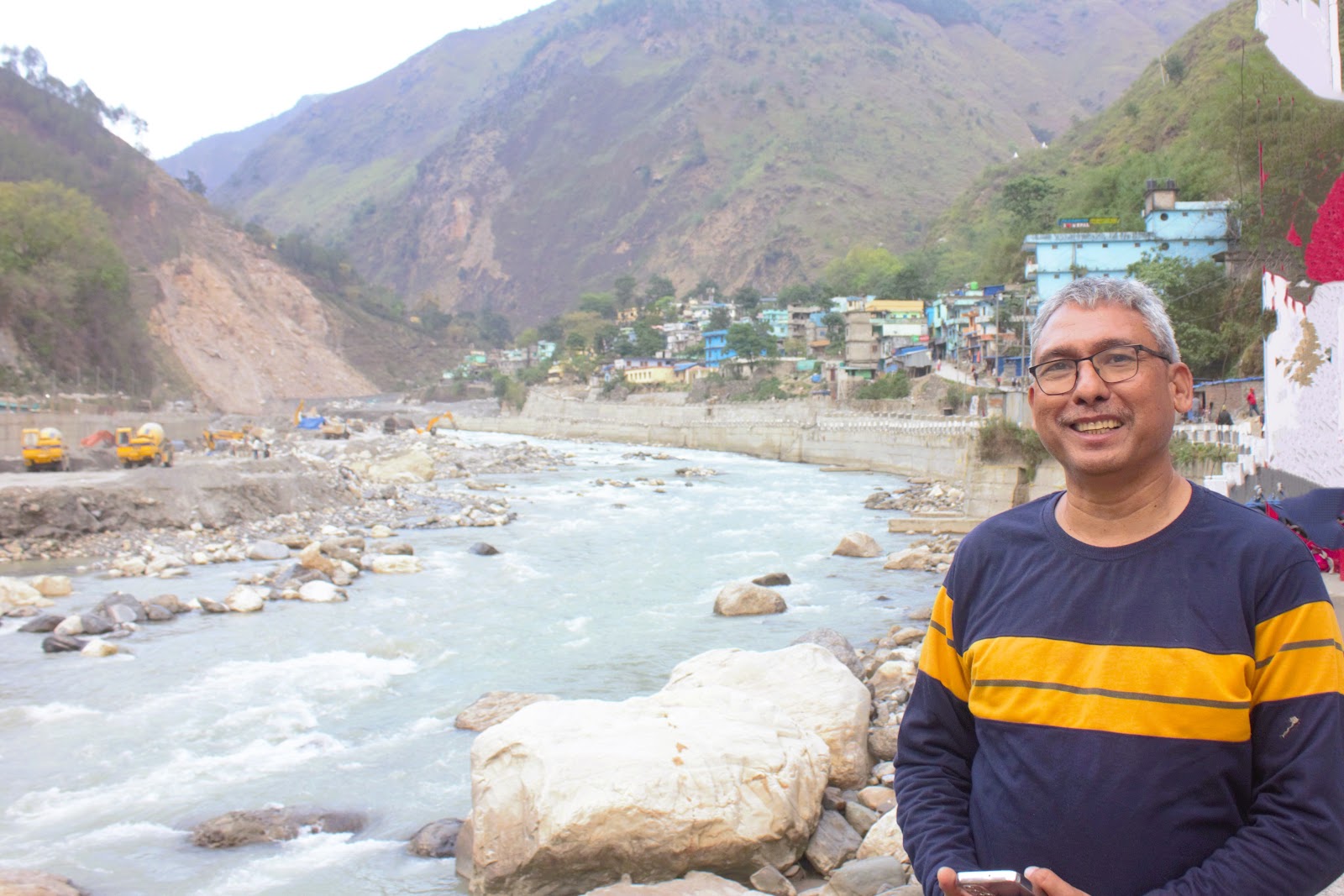
[Photo by dailytravelphotos.com]
Caste System in Muslim Society
The existence of caste system or reservation for dalit/backward Muslims has always been a controversial issue. It is an undisputed fact that though there is no caste system in Islam; the Holy Quran and the Prophet’s sayings are crystal clear that all human beings are equal, Indian Muslims did develop a hierarchial structure by characterizing numerous biradaris. Some Muslims established superior status for themselves as ashraf or noble on the basis of their foreign descent, while some indigenous converts are commonly referred as ajlaf or ‘lowly’. Some Islamic jurists too, deviating from Islamic teachings, in the name of kufu i.e. parity in marriage between the parties, legitimize caste system. Muslim law of marriage recognizes the doctrine of kufu in all vital respects including social status and descent, which, in India, means nothing but casteism.
The Sachar Committee Report, on the existence of castes among Indian Muslims, says:
“The present day Muslim society is divided into four major groups (i) the ashrafs, who trace their origins to foreign lands, (ii) the upper caste Hindus who converted to Islam, (iii) the middle caste converts whose occupations are ritually clean, (iv) the converts from the erstwhile Untouchable castes – Bhangi (scavengers), Mehtar (sweeper), Chamar (tanner), Halalkhor (Dom) and so on”. (p. 192)
On the level of backwardness, the Sachar Committee finds that ‘out of every 100 workers about 11 are Hindu OBCs, three are Muslim-general and only one is Muslim OBC (p. 209)’, whereas the population of OBC Muslims is as much as 75% of the total Muslims’ population.
The Sachar Committee’s findings further suggest:
“The incidence of poverty is highest among Muslim-OBC (38%) followed by Muslim General (35%)… Overall, the conditions of Muslim-OBCs are worse than those of Muslim-General …Within the Muslim community a larger percentage of Muslim OBCs fall in low income category as compared to Muslim-General.” (The Muslim OBCs and Affirmative action)
The committee recommends that “being at the bottom of the Social hierarchy, the arzals [SCs] are the worst off and need to be handled separately. It would be most appropriate if they were absorbed in the SC list or at least in a separate category”.
Similarly, the Justice Rangnath Misra Commission finds prevalence of castes among various sections of the Indian citizenry. It concludes:
“The caste is in fact a social phenomenon shared by almost all Indian communities irrespective of their religious persuasions”. (Para 16.3)
Historically, a good number of dalits converted to Islam. But after conversion their socio-economic status remained impoverished, backward and downtrodden. Most of them continued with their traditional professions as artisans, peasants and labourers, except those which were considered impure or unacceptable in Shariah. Nevertheless, of late, some of these Muslim caste groups got Islamised. They also became organized and given themselves Muslim nomenclatures. They identified and associated themselves with Islamic personalities. For example, the butchers designated themselves as Qureshi; the weavers as Ansari; the tailors as Idrisi; the Bhishtis as Abbasi; the vegetable vendors as Raeen; the barbers as Salmani; the carpenters and blacksmiths as Saifi etc. By joining the fold of Islam they did not get such a boost to their talents and abilities that they could face equal competition with all others.
Like any other socially identifiable group dalit Muslims too started searching their face in governance; in the services, particularly, at par with their counterparts among Hindus. In a democratic set up this is a quite natural and justified aspiration. They demand caste-based reservation as given in the constitution. They argue that according to Kumar Suresh Singh Report of SCs, there are some 35 Muslim castes that have SC background and engaged in occupations traditionally associated with SCs. They demand that Muslim SCs be included in the SC category. If Sikhs and Buddhist SCs, which religiously don’t sanctify casteism, can be given reservation, why not Muslim SCs?
The Presidential Order of 1950
The Presidential Order of 1950 bars dalit Muslims from reservation. This appears to be inconsistent with Article 14, 15, 16 and 25 of the Constitution that guarantee equality of opportunity, freedom of conscience and protect the citizens from discrimination by the State on grounds of religion etc. This denial of reservation is seen by many to be with an eye on the balance of power which is tilted in favour of Hindus. This seems to be an allurement to keep dalits within the Hindu fold. On the other hand, it attracts dalit Muslims to embrace Hinduism. Hence, the required amendment will surely be a step towards secularism, justice and equality.
On this Justice Rangnath Misra Commission states that ‘the caste system should be recognized as a general social characteristic of the Indian society as a whole, without questioning whether the philosophy and teachings of any particular religion recognize it or no”. It recommends that ‘Para 3 of the Constitution (Scheduled Castes) Order 1950 should be wholly deleted by appropriate action so as to completely de-link the Scheduled Caste status from religion’. The Constitution prohibits any discrimination between the citizens. Hence, any religion-based discrimination conflicts with its letter and spirit.
Role of Muslim Organisations
However, on the issue of reservation Muslim leaders are divided. One group demands reservation for the Muslims as a whole, arguing that the constitution talks about protective discrimination in the context of class not caste.
Jamia Nizamia of Andhra Pradesh had issued a fatwa against state govt. move to provide reservations for Muslims on the lines of castes. However most of the prominent ulema of the country, cutting across the lines of sects and organisations, had sharply reacted against the fatwa. Maulana Syed Ahmed Bukhari of Jama Masjid, Delhi, had declared that the fatwa will harm the interest of the community.
Similarly, Dr. Abdul Haque Ansari, ex-President of Jamate-Islami, in his presidential address to the workshop on Sachar Committee Report, had called the categorization of Muslim as ‘bad in taste’. He questioned: ‘if the entire community stands as backward class, where does the question of other categorization on caste line arise?’
[Photo by timesofindia.indiatimes.com]
Caste Vs Class
In the famous Indra Sawhney Case the Supreme Court had decided that ‘a caste can be and quite often is a social class in India’. Further it conceptualizes: ‘If it is backward socially, it would be a backward class for the purpose of Article 16(4). Among non-Hindus, there are several occupational groups, sects and denominations, which for historical reasons are socially backward. They too represent backward social collectives for the purpose of Article 16(4). Identification of the backward classes can certainly be done with reference to castes among, and alongwith, other occupational groups, classes and section of people. (AIR 582 SC 1993).
Syed Shahabuddin, ex-MP and President of All India Majlis-e-Mushawarat, says: “if caste can be interpreted as class, why not religion; that all Muslims are, socially and educationally, marginalized and deprived”. However, at other place, his alternative suggestion ‘to limit reservation to non-Ashraf only who constitute 90% of the Community and thus about 12% of the national population. With their average level of backwardness being almost equal to that of SC/ST, they would be entitled to a separate sub-quota of 11%’ (‘Muslim Community, Muslim OBCs and Reservation’, Muslim India, May 2007) appeared to be more justifiable and acceptable to the pasmanda Muslims.
The dalit/pasmanda groups’ major arguments are that according to the Indian constitution religion-based reservation is invalid; that if the reservation will be given to all Muslims, the ashraf, who have historically been forward in all aspects, will corner the benefits of reservation; that if for the purpose of endogamy and khilafat caste could be the criteria, why not for reservation also. They also argue that all Muslims are equally deprived is statistically incorrect. True, by and large, Muslims are deprived and face discrimination, but within the community backward Muslims, including Muslim SCs, are more under-privileged than ashraf Muslims. Advocating this view Professor Imtiaz Ahmed of JNU says that ‘en bloc reservation of Muslims is not a viable idea. Inclusion of Muslim Dalits as OBCs makes the most sense’.
However, though most of the Muslim organizations support a separate reservation for dalit/pasmanda Muslims through their routine resolutions, by and large, they feel shy in talking about reservation for dalit Muslims publicly or initiating any concrete step. Many consider it insignificant. But at this time when the issue is being discussed in the national media and is being, finally, heard in the Supreme Court, instead of shoving the issue under the carpet or being a silent spectator, it is their duty to rise to the occasion and build a public opinion. They should realise that this issue needs special attention and there should be no roadblock in the way of dalit/pasmanda Muslims getting fair proportionate share, for they are, as suggested by the Sachar report, ‘cumulatively oppressed’.
Repeated appeal to the Muslim community to maintain unity in the name of Islam is O.K., but foregoing the constitutional benefits, would not be a wise idea. May be some day in the future reservations will be based solely on community’s impoverishment, but until then caste-based reservation seems to be perfectly justified and demandable.
True, the Muslim community must reject the proposition of fragmentation, but they should apply the same principles of social justice as much within the community as it demands for itself within the nation.
(The writer is Director, Centre for Dissemination of Universal Message, New Delhi)
Tuesday, January 25, 2011


Monday, January 24, 2011
Muslim businessman donate to build a temple
Great example yet India does not need temples, mosques, Church and Gurudwaras but more money for education, health and eradication of hunger and poverty. Muslims or Hindus or any one would do well to come out of the politics of symbolism. The gesture is definitely praise worthy but we must now go beyond these symbols of secularism and work more on pragmatic community centric approach.
VB
Muslim bizman rebuilds mandir
Mohammed Wajihuddin, TNN, Jan 25, 2011, 02.16am IST
Article
Comments (1)
Tags:Hindu Temple At Ranthambore|City-Based Muslim Businessman
MUMBAI: Constructing a concrete example of communal harmony, a city-based Muslim businessman has funded the revamp of a massive Hindu temple at Ranthambore near Sawai Madhopur in Rajasthan.
The Ganesh Dham Mandir, built on the sole funding of businessman Ashiqali Nathani, will be opened on January 27 amid chanting of sacred mantras, speeches, followed by distribution of prasad and lunch.
Nathani, founder of Tiana group of companies which has stakes in power, shipping, infrastructure, leasing and finance, said, " The only motive (behind the Rs 1.5 crore project) was to set up an example of communal harmony and build bridges with our Hindu brethren," said 58-year-old Nathani before leaving for Ranthambore to oversee the inaugural function of the mandir.
Nathani said that it was his "dream" to reconstruct the temple after one of his directors suggested to him that he visit it. "The small temple was in ruins. There was no proper ashram for the chief priest, revered Prabhudasji Maharaj and other devotees who flocked to the mandir. I decided to get it construct it all over again," said Nathani.
A famed hermit in the area, Prabhudasji Maharaj, 98, is believed have done tapasya (meditation) for over 30 years in the jungle of Ranthambore which is known for its tiger reserve. As the priest's following grew, the state government allotted him a plot near the tiger reserve on which a small temple called Ganesh Dham Mandir came up. "Now we have built a 8000 sq ft temple, an ashram and a guest house on this plot. We believe that, if people of different faiths come together and reach out to those places of worship which are in dire need of restoration irrespective of gods and deities they belong to, it will help remove hatred," added Nathani who has reached Ranthambore with the retinue of his staff.
"It is a good gesture and others should emulate it. Muslims don't worship any idols. But there is nothing wrong in funding construction or restoration of a temple," said Zarar Quresih of Bhopal, who has known Nathani's temple project since the day of its inception.
Sunday, January 23, 2011
Victim of terrorism in pakistan
Terror claims 8496 deaths annually
by Dr. Qaisar Abbas | | |
A total of 2,113 militant, insurgent and sectarian related terrorist attacks last year killing 2,913 and injuring 5,829 people .Taliban, have been terrorizing Shia, Christian, Ahmadi, Hindu and Christian minorities in Pakistan. Iran in retaliation is supporting Shias
President Carter’s National Security Advisor Zbigniew Brzezinski admitted in an interview to a French magazine in 1998 that the United States started supporting Mujahedeen in Afghanistan prior to the Soviet invasion of the country. Responding to a question on the issue he specifically said:
Yes, According to the official version of history, CIA aid to the Mujahedeen began during 1980, that is to say, after Soviet army invaded Afghanistan, 24 December 1979. But the reality, secretly guarded until now, is completely otherwise. Indeed, it was July 3, 1979 that President Carter signed the first directive for secret aid to opponents of the pro-Soviet regime in Kabul. And that very day I wrote to the president in which I explained to him that in my opinion this aid was going to induce a Soviet military intervention. (Le Nouvel Observateur, Paris, 15-21 January, 1998).
Later in the interview when the journalist asked him if he thinks it was the U.S. support to the Afghan extremists that intensified fundamentalism in Afghanistan, his blatant response was:
What is most important to the history of the world, the Taliban or the collapse of the Soviet empire?
There are several explanations of how and why fundamentalism in Afghanistan and Pakistan flourished during the last three decades. Besides geopolitical issues, demographic changes, economic disparities, poverty and low literacy, foreign intervention in the internal affairs of Afghanistan is one of the most significant reasons behind the rise of militancy and extremism in the region today.
History proves, at least in the case of Afghanistan and Pakistan, that international intrusion, by regional powers and superpowers both, led to a heightened level of fundamentalism in the region. During the last quarter-century or so, Afghanistan has been occupied by the Soviet Union first and then the United States with a devastating effect on the societies in Afghanistan and Pakistan giving rise to an extremely dangerous level of fundamentalism and terrorism in these countries.
The first aftereffect of the American invasion of Afghanistan in 2001 was the unexpected popularity of religious parties in Pakistan who were in the fore front of opposing the invasion. These parties, who never received enough seats in national and provincial assemblies, all of a sudden ascended to the status of the third largest political group in the National Assembly of Pakistan in the 2002 general election. The alliance of religious parties, Muttahada Mujlis-e Amal (MMA) secured 51 seats in the national assembly and more surprisingly an astonishing majority in the two provinces bordering Afghanistan, Khyber Pakhtoonkhwa (known as NWFP then) and Balochistan. Consequently, the religious alliance formed governments in these two provinces and became an astounding political force in the center.
An unusually high intensity of violence by the extremist groups is another sign of unprecedented surge in fundamentalism. The Pakistan Institute for Peace Studies (PIP) that publishes the most authentic data on violent attacks released its Security Report for 2010 last week. PIP reports a total of 2,113 militant, insurgent and sectarian related terrorist attacks last year killing 2,913 and injuring 5,829 people. Although the data indicate an 11 percent decline in these incidents from 2009 to 2010, the incidents have been consistently increasing since 2007. Here are the comparative data for each year:
According to these data, on average 2,822 violent attacks are carried out involving an average of 8,496 deaths every year in Pakistan. This high number of attacks and civilian casualties was never experienced in the country before the 2001 invasion of Afghanistan.
Terrorist attacks are also increasing at an alarming rate in Afghanistan. The U.N. Secretary General Ban Ki-moon in a report said the number of violent attacks broke an all time record in Afghanistan in 2010 with a 94 percent increase from 2009 in the incidents related to explosive devices. The continued state of war has been accelerating each year with 3 suicide attacks and 7 assassinations of civilians every week. The shift to more complex suicide attacks demonstrates a growing capability of the local terrorist networks lined to al Qaida, the report said (Khaleej Times, June 20, 2010). According to the more conservative data of the Afghan government, the total civilian casualties rose to 1,292 while the war entered into its 10th year in Afghanistan.
The ever-growing fundamentalism can also be seen in the rising intolerance toward minorities, violence against women, and spread of religious ideologies through madrassas and political parties, sponsored by regional powers. The Saudi-Iran conflict has also been transformed into the religious and political infighting and violence in Afghanistan and Pakistan. Deobandi and Wahabi elements, sided with Al-Qaeda and the Taliban, have been terrorizing Shia, Christian, Ahmadi, Hindu and Christian minorities in Pakistan. Iran in retaliation is supporting Shias and other groups. The conflict has cost a substantial number of civilian casualties on both sides, mostly in minority communities.
Imtiaz Gul counted a large number of conservative institutions, fundamentalist political parties and extremist groups active in Pakistan in his book “The Unholy Nexus” published in 2002. The major groups and parties he cited include Jaamiat-e Ulema-e Islam Fazal-ur-Rehman and Samiul Haq factions, the two Deobandi groups who have established madrassas involved in training hundreds of young Muslims with conservative-religious indoctrinations. Other prominent groups include Sipah-e Sahaba Pakistan (SSP), Harkatul Mujahideen (Harkatul Ansar), Jaish-e Mohammad, Binori Mosque, Jamaat-e Islami, Ahl-e Hadith, Tehrik-e Nifaz-e Shariat-e Mohammadi, and Al-Rashid Trust.
Many of these religious groups run about 20,000 madrassas, or religious institutions, where 2-3 million young students study religion with a narrow minded worldview. Although several of these institutions provide moderate religious education, a substantial majority promotes intolerance, rigid religious ideologies and hatred toward rest of the religious groups and communities.
According to official sources over 19,000 of these madrassas are now registered with the Government of Pakistan. After intense resistance by these institutions and their representative organization, Ittehad-e Tanzim-ul-Madaaras, the Madrassa Reform Project launched by the federal government, has examined the curriculum and teaching methodologies of 507 institutions during the last four years (Akhtar Hameed Khan Resource Center, Public Forum, December 30, 2010). With this slow pace, it will take a long time to analyze pedagogical strategies of these institutions before entering the final phase of refining and improving their syllabi.
Finally, after ten years of a monumental military campaign that cost billions of dollars to American taxpayers, signs are the U.S. led coalition forces are getting ready to pack up and leave Afghanistan within the next three to five years. However, the most outstanding legacies they will be leaving in the region might include an unprecedented level of fundamentalism, an unparalleled militancy and an intensified wave of violence that has devastated the very fabric of the society in the region.
Hopefully, their departure will not add another chapter of civil war and atrocities as the coalition has demonstrated a commitment to continue development efforts in the region. After a long night of violence and suffering let’s give the people of this region a chance to regain their human dignity through education, basic facilities and elimination of poverty.
For Brzezinski, the strategy of supporting militants in Afghanistan might have worked in the short term but in the longer term of events it created snags of unimaginable magnitude for America itself. In the broader context of history, although America was successful in breaking up the Soviet empire, in the process it has transformed fundamentalism into the most extremist, treacherous and ruthless monster that came back to haunt not only the U.S. but the whole world, most importantly, Afghanistan and Pakistan.
Dr. Qaisar Abbas, a U.S. based free lance journalist, grant writing consultant and a published Urdu poet, frequently writes on media, literature and society. With a Master's degree in Journalism from Punjab University, Lahore, he worked as Public Relations Officer for the provincial government of Punjab. Later he joined Pakistan Television as News Producer before moving to the United States where he did Ph.D. from University of Wisconsin-Madison in Mass Communication. After working on administrative and teaching positions at several universities in the U.S., he is currently working as Assistant Dean at the University of North Texas. He can be reached at qaabbas@gmail.com
Saturday, January 22, 2011
Deoband's cocktail with Hindutva
Muslims dig heels: Deoband V-C must go
Share |
Express News Service
Backlash : Say Maulana Vastanavi has dealt a blow to fight for justice for riots victims
Strongly condemning the statements of the newly elected Mohtamim (vice-chancellor) of the Darul Uloom at Deoband, Maulana Ghulam Muhammed Vastanavi, Muslim groups in Gujarat called for his resignation saying he had caused great damage to the fight for justice for victims of the 2002 riots.
In a recent interview to a daily, Vastanavi had praised Chief Minister Narendra Modi, saying Muslims are prospering in Gujarat.
Mufti Ahmed Devalvi, president of the Committee for Protection of Madrasas in Gujarat, said Maulana Vastanavi did not appear to be acquainted with the ground realities in Gujarat as he spent most of his time in Maharashtra where he ran a number of educational institutions.
Devalvi wanted Vastanavi to visit Muslim localities in Ahmedabad, Vadodara and Surat to know if these were part of Vibrant Gujarat. “I am sure he will change his mind after seeing the appalling conditions of Muslim localities with poor civic amenities,” said Devalvi.
“It is better if Maulana Vastanavi resigns,” says human rights activist and president of the state unit of Peoples’ Union for Civil Liberties (PUCL) J S Bandukwala. Regarding the Maulana’s comments that Muslims were not facing discrimination under Modi’s rule, he said that barring one, all of the 217 persons booked under POTA post-Godhra were Muslims and all the Godhra accused were in jail for the nine years while Babu Bajrangi, having confessed to his role in Naroda Patiya massacre on Tehelka tapes, was roaming around freely. “If this is not discrimination, what else is this?,” asked Bandukwala.
Vadodara-based Yusuf Sheikh, director of Aantakri Visthapit Hak Rakshak Samiti (AVHRS) involved in rehabilitation of riot victims, too demanded the Maulana’s resignation, saying he did not deserve to head an institution like Daul Uloom at Deoband. Sheikh said the entire rehabilitation work was undertaken by NGOs and not the state government, as claimed by the Maulana.
Dr Hanif Lakdwawala, who runs an NGO, Sanchetna, said it was better for the religious leadership to keep away from politics. “They should not dabble into an area with which they are not acquainted,” he said.
Deoband's love affair with Modi shocks the Muslim world
Personal relations behind rival's silence on Vastanvi's Modi praise?
Abantika Ghosh, TNN, Jan 22, 2011, 04.07am IST
Article
Comments (8)
Tags:Narendra Modi|Maulana Vastanvi|Maulana Arshad Madani
NEW DELHI: In the chorus of protests that greeted new Deoband vice-chancellor Maulana Vastanvi's "certificate" to Gujarat CM Narendra Modi, the deafening silence of Maulana Arshad Madani -- the man who lost to Vastanvi -- is speaking louder than the loudest hoots.
Arshad Madani is leader of one of factions of the Jamiat-Ulama-i-Hind -- the clerical and political wing of the Deoband seminary -- is seen to be tied in personal bonds that prevent him from flaying Vastanvi as several Muslim leaders have.
Community leaders say the reason for Madani's reticence lies in the Maulana's son Habibullah being married to Vastanvi's daughter. The Maulana, who lost control over the Jamiat in a messy battle with his nephew and Rajya Sabha MP Maulana Mahmood Madani, has kept out of the controversy.
It being debated whether the elections -- in which Vastanvi got eight votes, Arshad Madani four and Abdul Khaliq Madrasi, the third contender, two -- were actually fixed.
Rivals of Madani and Vastanvi are asking about the role of an MP who was once close to Arshad, but backed Vastanvi in the Deoband poll. Vastanvi's reported proximity to the Modi dispensation, his numerous educational institutions in Gujarat and reports about an upcoming medical college are doing the rounds.
Since Vastanvi's spoke about the Modi government, the response from senior Madani's camp has only been that Arshad was busy discussing issues and meeting people. Despite repeated attempts no response was received from the Maulana.
"It does not gel. A man who has lost to another at a prestigious election so recently would, under normal circumstances, be critical even of his minor slip. In this case, the Maulana has not uttered a word at a comment that has sent shockwaves across the community," asked a member of the All India Muslim Personal Law Board.
The member wanted to know if the silence has to do with the two being related by marriage or because there is a "larger conspiracy to take over the world's largest religious seminary?"
Founded in 1866, Dar-ul-uloom is a Muslim school that propagates Sunni Islam. It has a very high standing among Muslims in India, Pakistan, Bangladesh and more recently in Afghanistan, the United Kingdom and South Africa.
"The Bihar elections showed RSS and Modi that no matter what the stain of the riots would not go away anytime soon so they must have realised that they needed somebody with unassailable reputation to give a certificate. So they have wrangled this cerificate," said a Muslim cleric.
Most in the community seem to think the bitter fight between the two Madanis over the Jamiat-ulama-i-Hind a couple of years ago could be a reason for the Deoband seminary elections becoming so crucial. "The minority faction in Jamiat (Arshad Madani) felt if it can become the power behind the throne in Deoband it would get a legitimacy they lack," explained a former member of the Minorities Commission.
Read more: Personal relations behind rival's silence on Vastanvi's Modi praise? - The Times of India http://timesofindia.indiatimes.com/india/Personal-relations-behind-rivals-silence-on-Vastanvis-Modi-praise/articleshow/7336633.cms#ixzz1BlvTM321
Monday, January 17, 2011
Dainik Bhaskar
http://www.bhaskar.com/article/UP-hindus-in-bhagwanpur-and-muslim-in-allapur-1758309.html?HF=
रविवार,16 जनवरी, 2011 को 01:22 तक के समाचार
Home >> Uttar Pradesh >> Rajya Vishesh
भगवानपुर में मुसलमान अल्लापुर में हिंदू
Source: शाहनवाज मलिक | Last Updated 01:24(16/01/11)Comment| Share
सिद्धार्थ नगर. उत्तर प्रदेश स्थित सिद्धार्थनगर जिले के दो गांव अल्लापुर और भगवानपुर देश के अन्य गांवों की तरह होते हुए भी एक खास पहचान रखते हैं। अल्लापुर की लगभग पूरी आबादी हिंदू है, वहीं भगवानपुर में 90 फीसदी मुसलमान परिवार हैं। इन गांवों के सिर्फ नाम ही नहीं, निवासियों के रीति-रिवाज, विचार और काम भी सांप्रदायिक सद्भाव की अद्भुत मिसाल हैं।
भगवानपुर की करीब डेढ़ हजार की आबादी में महज 30 घर हिंदुओं के हैं। इन घरों में दिवाली के दिन दीपक जलते हैं और नवरात्रि में दुर्गा की पूजा पूरे विधान से होती है, लेकिन अगर इनके यहां किसी की मौत हो जाए, तो शव के अग्नि संस्कार की बजाय उसे दफनाया जाता है। भगवानपुर के हिंदू घरों में भी अंतिम संस्कार मुस्लिम रीति-रिवाज से होता है। इस गांव के भानू बड़ी सादगी से कहते हैं,‘ हम जिंदा रहते एक-दूसरे से भेद नहीं करते, तो मरने के बाद क्यों करें? हम मृतकों को जलाने की बजाय स्वेच्छा से दफना रहे हैं।’
दूसरी तरफ, अल्लापुर की लगभग एक हजार जनसंख्या में रुआब अली का अकेला मुस्लिम परिवार है। वे गर्व से बताते हैं, ‘अगर हम किसी मुस्लिम बहुल गांव में होते, तो इस प्रेम और सहयोग से वंचित रह जाते। कभी-कभार होने वाली तकलीफ को बांटने के लिए हमारे पड़ोसी दीनानाथ और रामदेव हमेशा हाजिर रहते हैं। हमारे लिए यही इस गांव की सबसे बड़ी सौगात है।’ अल्लापुर में हिंदू और भगवानपुर में मुसलमानों का बसेरा कब से है, इसका ठीक-ठीक जवाब दे सकना गांव और आस-पास के लोगों के लिए भले ही मुश्किल हो, लेकिन अपनी अनोखी विरासत पर उन्हें पूरा फख्र है।
अल्लापुर में जन्मे 42 वर्षीय बृजेश कुमार शुक्ला इस बार पंचायत चुनाव में ग्राम प्रधान चुने गए हैं। वे कहते हैं, ‘नाम तो पूर्वजों ने ही रखा है। क्यों रखा था, इसका तात्कालिक कारण बताना अब मुश्किल है, लेकिन हमारे गांवों में कभी किसी झगड़े-फसाद का न होना इस बात इस बात का साफ और सीधा इशारा है कि हमारे पुरखे क्या चाहते थे।’ अल्लापुर और भगवानपुर के बीच एक नहर का फासला है और दूरी करीब दो किलोमीटर लेकिन वहां दिलों के बीच कोई फासला नहीं है।
55 बरस के लालजी तिवारी बताते हैं, ‘इन दोनों गांव के बीच कुछ ऐसा रिश्ता है कि मुसीबत और परेशानी में सब एक-दूसरे के लिए खड़े हो जाते हैं। हम कम पढ़े-लिखे लोग हैं, पर एक-दूसरे की तकलीफ को बखूबी समझते हैं। दुख और परेशानी तो अपनी जगह हैं, लेकिन अल्लापुर और भगवानपुर में शादी-ब्याह की रस्म भी एक-दूसरे के शामिल हुए बिना पूरी नहीं हो सकती। अल्लापुर में होने वाली शादी में भगवानपुर का हर घर शामिल होता है, रात-रात भर जागकर बाहर से आए मेहमानों की खातिरदारी में लगता है। वहीं ईद के मौके पर भगवानपुर में बनने वाली सेवइयां और शुबरात का हलवा पड़ोसी गांव अल्लापुर वालों के लिए खास अहमियत रखता है।’
बहरहाल, नामों को परे रख दिया जाए, तो भी दोनों गांवों में बहने वाली अमन की हवा उनकी असली खूबी है। कभी किसी झगड़े या दंगे के सवाल पर ७२ साल के अब्दुल मजीद एक मिसाल देते हुए उल्टे पूछ लेते हैं कि 1992 में अयोध्या कांड के दौरान अल्लापुर के हिंदू मातम कर रहे थे, ऐसे माहौल में दंगा होने की गुंजाइश ही कहां रह जाती है! इसी बीच अंसारुल्लाह नजर आते हैं। वे खेत में पानी चलाकर आ रहे हैं। मेरा कोई भी सवाल उनके मन में दिलचस्पी नहीं पैदा कर पाता है। वे कहते हैं कि दोनों गांव में हर कोई खुशहाल है।
A Rickshaw puller and an author of four books
A rickshaw puller and an author of four books
Sunday January 16, 2011 12:26:43 PM, Asit Srivastava , IANS
Related Articles
At 12, he is newspaper editor, reporter and publisher
He is all of 12 years but Utkarsh Tripathi painstakingly brings out a handwritten newspaper every week to spread awareness among his peers on issues like the environment and female foeticide. And all this to satisfy his urge to "serve the country". »
Lucknow: Rehman Ali Rehman, a rickshaw puller in Uttar Pradesh’s Basti district, doesn’t mind if has to wait long for a customer. He uses the time to scribble on pieces of paper - poems for his forthcoming book. Rehman, a native of Badeban village in Basti district, has already penned four books that have a total collection of around 400 poems on topics like national integration, communal harmony, water woes and corruption.
“I don’t mind when I don’t get a ’savari’ (customer) for my rickshaw, as I utilise the time in writing poems,” Rehman, 55, told IANS on a mobile phone arranged by a local in Basti, some 300 km from here.
“Writing poems is an integral part of my life. I feel it is a driving force that gives me strength to face hardships of life,” he said.
Rehman, a school dropout, always wanted to become a writer.
“My father was a small famer. When I was about to pass Class 10, my father had nothing left to spend on our family. The small farm we had was also sold for my studies,” he recalled.
“After my father’s death, I left my studies and took up menial jobs. I had no resources and time to pursue my ambition.”
Rehman then went to Kanpur and worked at a cinema hall.
“I got to watch Hindi movies at the cinema hall. I used to listen to songs carefully and noted some words from them. Thereafter, I tried to write songs on my own.”
With his songs, Rehman became popular among the cinema hall staff.
“They (cinema hall officials) often listened to my songs. They motivated me to take up a writer’s job. I just felt on top of the world when they appreciated me for my songs,” he said.
“Earlier, I used to write songs on love relationships, but later I started writing poems on national integration, communal harmony and other topics.”
He later moved back to his native village where he got married and started working as a rickshaw-puller but continued to write songs and poems.
Rehman got his first book published with assistance from a customer, who happened to be a writer.
“A ’savari’ once noticed me writing on a piece of paper. He asked me about it after which he came to know about my aspirations.”
“He invited me to recite poems at a function at the district Kanpur jail on Republic Day,” he added.
Unaware of what life had in store for him, Rehman participated in the function and discovered that the man who invited him was Ram Krishna Lal ‘Jagmag’ - a humour poet (satirist).
“He is my first guru, who in a way gave me a break to showcase my skills. During the function, I came in contact with several writers who suggested to me to get my poems published in a book,” said Rehman.
At another function, he met some teachers of Gorakhpur and members of Kanpur-based Manas Sangam - an organisation involved in the promotion of Hindi literature, and with their help he got his first book “Kuch Kavitayen” published in 2005.
Rehman authored three more books - “Rehman Ram Ka payara ho”, “Mat vyarth karo pani ko” and “Kaise Samjhe hua vihaan”.
Manas Sangam convener Badri Narain Tiwari told IANS, “Rahman is just amazing in every sense. His sustained efforts at writing poems despite the unfavourable conditions really need to be acknowledged.”
“He is a living example for those who think that a mission cannot be achieved with limited resources,” Tiwari said.
Rehman lives in a small rented room in Basti and has no complaints with the almighty.
“I just thank Him for helping me achieve what I had always dreamt of.”
“Though poor living conditions didn’t allow me to take proper care of my six children, I feel they too would be able to survive hardships of life,” said Rehman, adding that he is working on a couple of books.
While Rehman has got his three daughters married, his three sons work as labourers.
(Asit Srivastava can be contacted at asit.s@ians.in)
Subscribe to:
Posts (Atom)