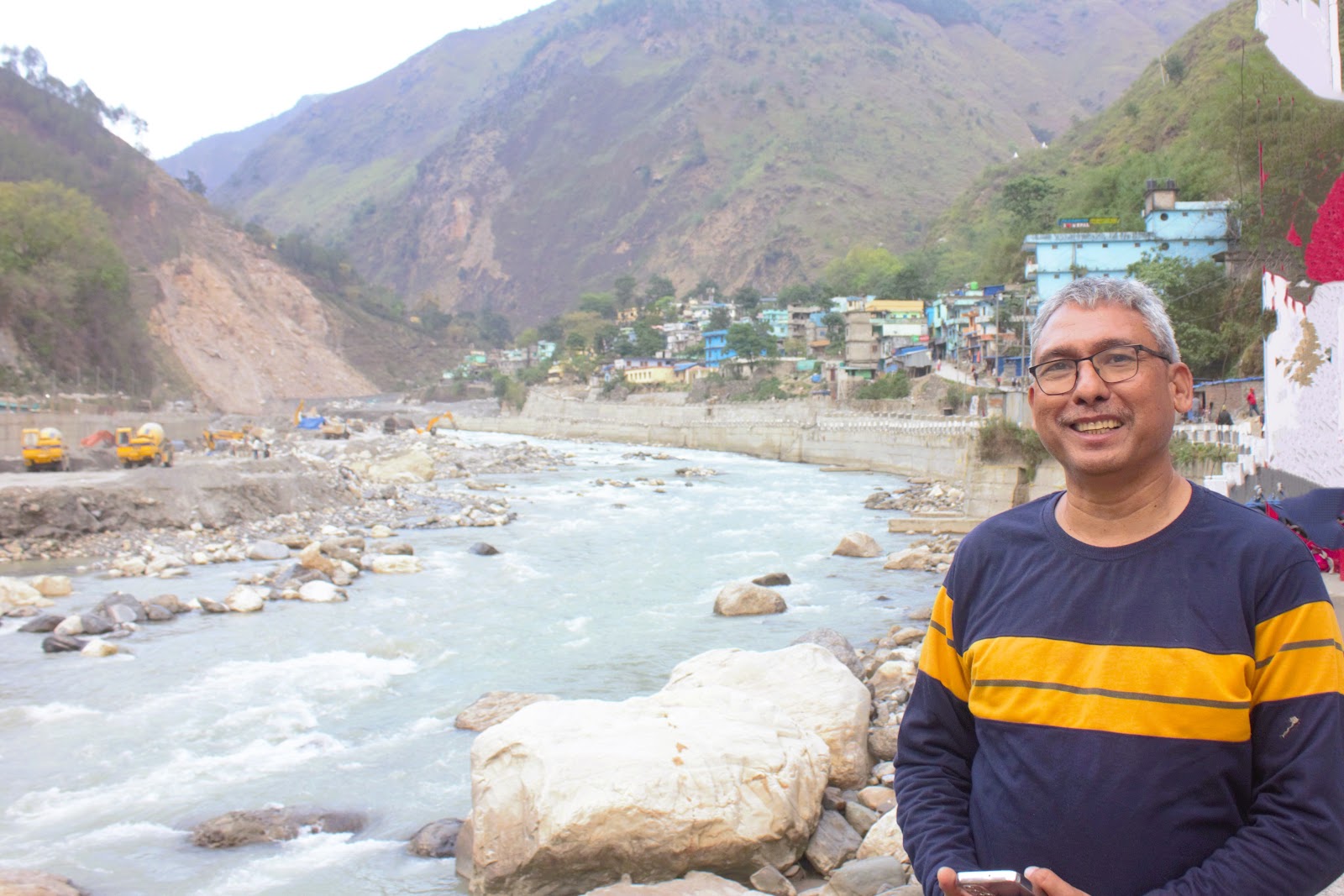
A tribute to an undefeatable spirit for Human Rights
By Vidya Bhushan Rawat
Prof Iqbal Ansari, the one man army of documentation of facts related to issues of Muslims in India passed away on October 13th in his home town of Aligarh, where he grew up and developed a vast treasure of friends working on human rights all over the country. Even those who might have disagreed with some of his over emphasized and simplistic observations, would not disagree with a fact that he was overwhelming concerned about the growing animosity on the Hindu-Muslim unity, a subject which was very dear to him and brought him constant touch with country’s respected human rights activists, peace activists for India-Pakistan friendship as well as all those who were deeply concerned of the growth of the Hindu fundamentalism in India as a counter to Islamic fundamentalism growing elsewhere.
Professor Ansari was a teacher in Aligarh Muslim University and many of his students might not even thought of him developing such vast network of individuals working on human rights all over the world. Despite a regular to various human rights forums and meetings in Delhi, he never left his roots from Aligarh. Very rare would you find a man, in the human rights circles in India, who had such a vast knowledge of human rights system in India and world over. He was well acquaint to international treaties, conventions and covenants and tried to minutely observe different laws in India which used to be discriminatory. Whether it was TADA or POTA, Gujarat or Maharashtra Riots, Babari demolition and aftermath, or Kashmir, Prof Ansari was every where. He did not really need an organization. In fact much time, I realize that for doing his work, he was singlehandedly perusing things with all efforts. He was a prolific writer particularly writing lengthy notes, letters on the issues of communal situation in India, edited various volumes and magazines, got published every where as he would respond immediately to an issue. That he was determined to respond to a subject with great alacrity and absolute
Understanding.
While I disagreed with many things that he wrote which I perceived to be a mere response to counter VHP-RSS propaganda and to some extent typical Hindu upper caste responses of ‘ Hindu Muslim unity’, a fad which we have seen and has failed in india without addressing the issue with in the Muslim community too and seeking their advice, yet the point I admired in him was his never ending spirit of fighting against what he felt to be injustice being done to minorities in a secular democratic state of India. He would visit places, attend seminars and speak for hours without wanting to be disturbed, unless told to stop yet none of his bitterest critique would ever point out a finger at his quality and depth of understanding the situation.
Two big volumes that he edited for Minorities for Institute of objective studies reflect his vision and fighting against the propaganda of Hindutva through credible evidence of human rights violation and involving leading human rights luminaries like Justice V.M.Tarkunde, Rajni Kothari, Amreek Singh, Dr R.M.Pal, Y.P.Chhibor, Kuldeep Naiyar and Justice Rajendra Sachar. It is interesting to see that the publication that he was editing for Institute of Objective Studies, known as Human Rights Watch was like a one man show. He requested, republished articles from all these leading luminaries, asked them to write for volumes her produce and involved them in the initiative of the Institute of Objective Studies, for securing and protecting the minority rights particularly of the Muslims in India.
‘Reading on Minorities’ of which three volumes are already out and now we are waiting for his fourth volume on the issue being published by Institute of Objective Studies. One can only say that he did work very hard to bring these issues and was dedicated to place an evidence based fact finding report. Though they were too large and some time he did place his personal communications with different departments and ministries in these volumes yet none would ever question his zeal to work for the community and its common cause with a greater secular society. He was not comfortable with Muslim issues being discussed in isolated. In fact long back at a seminar in Aligarh he talked about bringing together he talked about a common platform for the Dalits irrespective of their religion so that their issues could be fought with more vigorously.
The disgraceful destruction of Babari Mosque had created a scar in the psyche of the modern nation and it revealed the true forces of the brahmanical supremacy. Many among the Muslims were talking of avenging things, but Ansari was always for rapprochement between the communities. He worked with Gandhian tirelessly particularly likes Late Nirmala Deshpande though we all know that at the height of Ayodhya tragedy their role had not been proactive. At the time when the Muslim intellectuals were quite sidelined and in their own ghettoes, Ansari reached beyond Islamic world and placed his point of view among the secular intelligentsia. That was his biggest forte. He was not an organizational man and that is why even the journal that he edited many time put his own stamp on the entire issue. He wanted to see things from a particular angle and would convert an article into a letter. He opened channels with those dissenters who were despised by the mainstream Muslim intelligentsia and did not shy away defending Taslima’s right to speak and condemning her vilification of Islam. wrote articles on Hindu Muslim unity.
A highly read person Prof Ansari would be missed in the human rights circle a lot. His efforts to network with different communities, his attempt to develop a ‘ Minority Council of India,’ his active involvement with social movements particularly related to Muslims and their mainstreaming in India, his various books, publications, will remind us his tireless efforts to work for the human rights in India. He has been a member of humanist movement in India, though writing from a religious angle, once upon a time he claimed he can be a humanist despite being a Muslim. The point, I want to make it, is whether he believed or not in religion yet he believed in the principals of human rights and against discrimination and perhaps he felt that is the best practice of humanism rather then discussing whether God existed or not.
Every time, we met in a meeting or seminar, Prof Ansari would bring some volumes of his work, his letters and distribute and ask us to endorse. He would often ask us about minority council of India and how can we work together. Unfortunately, as I said some people have good intentions yet they remain essentially academic activists and their stamina and patience level is quite different than what is required to create an organized movement. I felt that particularly whenever the publications for IOS were tried and attempted. Yet, I would always say that whatever he wrote, it came from heart and of course, with best intents and full of thoughts and consideration of the national and international laws. He was a concerned man, a well equipped intellectual activists and in his death we are deprived of a person who worked for the communal harmony all over the country without caring for an award or reward. Dr Ansari’s work will always remain master pieces for those working on human rights. His various work on Communal riots in India ( published by institute of objective studies) is actually eye opener and contain lot of material for all of those who want to know what went wrong. The way he tore reports on police reform and suggested what could be done to make our police and paramilitary forces secular is the need of the hour. It is a daunting task that the representation of Muslims in India’s different sectors including security forces and police need to be addressed by the government of India. One hope that the Institute of Objective Studies and various human rights bodies in India will acknowledge the great work done by Professor Ansari and carry forward the legacy created by him by fulfilling those task which he espoused for, particularly developing a secular society without compromising on the ethnic religious identities of the groups and communities. If India turns a tolerant society respecting traditions and sentiments of each other including that of the dissenters also, it would be the finest tribute to Professor Ansari.
Sunday, October 18, 2009


Monday, August 17, 2009
Education for Rights and dignity : A lesson for National Literacy Mission
Munni Begum’s struggle for life with dignity
By Vidya Bhushan Rawat
Pratapgarh district of Uttar-Pradesh is known for its feudal background where land relations are still intact and status-quoists forces are still powerful to dominate political discourse. Just four hour drive from the state capital Lucknow, Pratapgarh’s powerful caste forces are still effective and politically active. The local Zamindars had sucked the blood of the small and marginal farmers predominantly from the Dalit-backward-Muslim communities. A large number of Muslims here hail from Ansari community mostly working with unorganised handloom sector. The Dalits live in deeply difficult circumstances without owning any land. It was the land of Baba Ram Chandra Das who led historic peasant revolt of Avadh in late 1920s against unjust taxes imposed by the cronies of the local royalty. When the movement grew powerful the upper caste leadership of the congress party foiled it with false promises. Unfortunately, those who became symbol of revolt against the feudal oppression have been co-opted by the religious fundamentalists and Pratapgarh is very much in the grip of power elties.
In the Patti Tehsil of district Pratapgarh, a lean, tall lanky Muslim woman has created storm by her grits and determination against injustice. Led by her personal dedication and selfless public service, 35 years old Munni Begum has become the voice of the rural marginalized people particularly landless peasantry. Munni Behin has been organizing Dalit and Muslim women to fight for their land rights. She would go the village on her cycle covering her head, take down the dusty uncomfortable terrain with her grits and courage. Whether it is the issue of National Rural Employment Guarantee Scheme or others, Munni would fight with officials for the rightful wages of the rural poor particularly women and get them justice. She became hugely popular figure in her region compelling some of her friends to see a good political fortune for her. She contested the Zilla Parishad which is basically a district Government, and defeated her opponents with a handsome margin in the year 2000. All her opponents were defeated. The district administration was under the influence of the BJP leaders who were determined to defeat Munni Begum. But she was fielded by the common people of Pratapgarh hence she was firm. She was given the victory certificate next morning as the political parties tried to influence the verdict.
Munni was people’s candidate and political parties used huge money to influence the voters. She did not have money but people collected funds for her and in all her campaign cost Rupees Thirteen Thousand only against her powerful political opponents who spend millions of rupees to win the election. She campaigned on cycle and reached every house hold on her own.
But being a people’s representative was not an easy walk for Munni Begum. She did not come from a powerful family. Her parents were landless agricultural workers. Her father was mostly into the loom work and as the facts are clear these days, he was finding it difficult to run the family. Under compulsion, he got Munni married in 1983 when she was just 12 years of age. Her husband himself was an illiterate but working in a factory making aluminum utensils in Baroda, was just 14 years of age.
Married life had its own problems especially when the family live on subsistence. Immediately after marriage, her husband had to leave to Baroda for his work. He promised her to write letter. When Munni asked him ‘how would he write when he did not know about it’, he said, ‘well, I have some friends and hence I would ask them to write to you.’ After getting first letter, it was difficult for Munni to read the letter hence she went to a neighbor who could read it. She wanted to respond the letter. This woman was her neighbor, a non Muslim yet very friendly with Munni. Munni went to her to write letter to her husband but every time she tried to write the letter, her father in law would not allow his daughter in law to help Munni under the pretext of work. Munni got fed up of various ifs and buts from this woman and decided that unless ‘I am able to write a letter myself, I will not write any letter’. And next fortnight was very tough. Munni started learning Ka, kha, Ga, Gha..the alphabets in Hindi from the young school going siblings. She would write on the walls, on the floor with coal. Chalk or note books were luxury for her so she would use all those things which were available and were not expensive. That was her first victory. She then decided to enroll her with younger siblings and got passed 8th standard. She then appeared for High School by enrolling herself privately. She passed out with flying color. She then joined a local ‘English’ school and started teaching young kids. She was getting a remuneration of Rs 500/- for that. She also started earning from taking sewing classes for local women. When she wanted to appear for the intermediate classes, her husband was diagnosed with tuberculosis, a common problem with those working in looms and dusty work. Yet, Munni never looked back. She appeared in the board for 12th and passed her examination. Her determination was paying. Circumstances around her were difficult. She was earning and taking care of her husband too. By this time she had a son who was growing. Munni would take care of her ailing husband, then small child and her in laws. But now she was a public figure also but at the same point of time, determined to change her destiny. She finished her graduation too. Her dream of having a degree fulfilled a dream for a community as well where women are in the purdah and not relegated to living inside home.
Her grits and determination was growing and her community started respecting her. She would go to the local block office and lead the group of women. Corrupt officers were afraid of her as they knew it well that Manna could bring thousands of women with her and surround the police station or argue with the block development officer against corruption, non availability of NREGA Job cards. She would go help find pension for the widows, physically challenged women, single women etc. Soon, her work gave her much name and fame in the area.
She started attending seminars and workshops and her personality changed a lot. The major change in her life came when she was elected the vice president of Uttar-Pradesh Land Alliance, in an annual convention in January 2008 in Lucknow. Munni Begum got opportunity to visit many places and spoke her mind. In December 2008, she joined a Padyatra in the Uttarakhand region for the land rights of the Dalits and Adivasi people in the Tarai region of the state. Munni was always determined to make her mark in the history. She brought out Muslim women and Dalit women from home, keeping aside her deeply disturbed personal life.
Several years back, she discovered that her husband was suffering from tuberculosis. She called him back and he was confined to bed for many years. Though some of us who had been working closely with her and would share her pains and happiness, knew about it, Munni never really informed any one of it. She would come to the meetings, would laugh and speak with firm convictions.
One day we met in Allahabad in a programme and discussing many things when she informed me that the condition of her husband was too bad. I could not believe how she kept this pain in her heart. She was earning and working. The money that she might have been earning was a meager amount as we all know the conditions of the rural India and the grassroots organizations and their payment strength. Munni had by that time completed her graduation final year and had planned to appear in the first year of the masters degree. It was a remarkable feat for a woman who was completely illiterate to study and reach at this level.
Just some days before she was to appear in her first year masters examination, Munni Begum’s husband passed away. It was shocking news to me yet she kept her composer. Some of us who knew about her understood the deep pain she was carrying yet always salute her strength. She was working with Tarun Chetana Sansthan where Mohammad Nasim Ansari or Nasim Bhai helped her intervene in the social sector. Nasim Bhai stood with her in her thick and thin. One day, I got a call from Nasim Bhai that her husband has passed away. She was not in a condition to speak so I conveyed my condolences to her. After some days, when Munni was returning to her normalcy, Nasim Bhai informed me that she might not appear in her examination as she was in the conventional ‘iddat’ period and according to traditions she was to stay inside home, moaning for the death of the husband for nearly 40 days. I felt bad about it as how can she be asked to sit inside home. Munni Begum was a public figure. More over she was the sole bread winner of her family. Living inside home would mean that family would lose the services of the only earning member as well as it would create more mental disorder for her. Some of us felt that the more she is out of her home for work, the better it would be for her health and mental status. It was also important for her to appear in her Master’s examinations as she has worked hard to reach to that stage. After initial problems, the local Muslim clergies realized that Munni was an important public figure and they should support her. Munni won heart of people and hence they stood with her.
She could not pass her examination last year but is reappearing for her Masters examination again this year. Her son is preparing for bachelor examinations in Allahabad. Munni Begum is now vice president of Uttar-Pradesh Land Alliance and struggling hard to give women of her region a reason to believe in their strength. She is always there to help those who are needy.
Munni Begum is a strong votary of women’s right. She is campaigning against injustice in the villages. There are many Munni Begums who might not speak converted English but working harder to change the lives of many. They are the role model who comes through struggle and hard work. They fight their daily battle. Munni could have made huge money through her politics but she did not. She still lives in very modest houses and drives her two wheeler in the village. For a woman to drive two wheeler is a difficult thing but Munni has made it possible. She want that the civil society should be developed at village level and that Muslim and Dalit women should be given land rights. Munni’s vision for women is for an equal partnership in development.
Today Munni Behin heads Nari Chetna Samiti which literally means Women Awareness Committee, a local civil society organization. She has already developed 25 Self Help Groups and educated 250 illiterate women of the nearby villages. Munni Begum is an inspiring woman with high aspirations. Her aim is to see that every person deprived of her right get justice. Munni leads with example. She has a whole history of struggle and determination behind her. One is hopeful that she will get required support from peoples and organizations who believe in equality and human rights so that she gets strength to continue with her battle.
Subscribe to:
Posts (Atom)